
Trace Former Owners in Chesapeake
Former owners in Chesapeake come to light through the land's recorded transfer history. An address list will not do it. Read the chain backward. Each deed's grantee becomes the grantor in the earlier instrument, and the land itself must stay in view at every transfer. A renamed street, a subdivision split, or a predecessor locality can send a name-only search straight to the wrong parcel. That is the core habit. The working table lays out the evidence to capture at each step, without treating a sample as a real ownership history.
| Transfer date | Grantor to grantee | Instrument | Reference |
|---|---|---|---|
| Record the deed date | Current grantee to prior grantor | Sale, fiduciary, or other deed | Book/page or instrument number |
| Record the earlier deed date | Prior grantee to that deed's grantor | Earlier conveyance | Confirm same legal description |
| Record the plat date | Developer or parent tract to lot owners | Subdivision plat | Map book and lot/block |
The Clerk of Circuit Court publishes wide coverage. Deed indexing and images run from 1637 to current. Plats begin in 1879, wills in 1755. Judgments date from 1987 and financing statements from 1998. Those ranges describe what each series holds, not a promise that every predecessor item sits in one online index. Start a modern chain with the latest deed. When the chain breaks, test the locality, the party's capacity, and the legal description before moving to another collection.
Coverage dates help you pick the likely record series. They say nothing about identical search fields or remote access. A deed entry locates the conveyance itself. A plat shows how a parcel was divided, while a will or qualification explains an estate representative's role. Judgments and financing statements can affect a recorded interest without proving any deed transfer, so note each index source and reference before directing a request to the right collection.
Trace Chesapeake Prior Owners Backward
The practical job is linking each instrument to the same land. Chesapeake's Circuit Court Clerk keeps a grantor-grantee index. A grantor gives up an interest. A grantee receives it. One instrument may cite a lot and block, a map book, or a metes-and-bounds description, so copy the reference and the full legal description before hunting for the prior transfer.
- Find the latest deed under the present owner's name as grantee; note the recording date and reference.
- Read the grantor, legal description, and any plat or book/page citation from the instrument.
- Search that grantor as a grantee in an earlier deed, checking that the land description still matches.
- Repeat with alternate names or predecessor localities until the intended period is reached.
- Grantor
- The party transferring the interest in that deed.
- Grantee
- The party receiving the interest.
- Chain of title
- The linked record of transfers affecting the same parcel.
- Legal description
- The land description that ties an old deed to the parcel more reliably than a modern street name.
Tracing previous owners in Chesapeake means following each grantee back to the earlier deed's grantor. The same land must remain in view the whole way. A matching party name is never enough. The next instrument should describe the same lot, a documented parent tract, or a piece of that tract a plat can follow. If the description shifts from metes and bounds to lot and block, bridge the change with the referenced map and any cited prior deed.
Chains rarely run clean. A correction, a release, or a fiduciary conveyance can sit between ordinary sale deeds. Note each instrument type. Also record what interest it addresses. Those details keep the ownership story honest.
How Far Back Chesapeake Prior Owners' Records Reach
Chesapeake's published deed index and imaging reach from 1637 to current. The Clerk dates wills to 1755. That is remarkable depth for former-owner research. Yet the office also warns that other South Norfolk and Norfolk County data varies. Never assume every historical record carries the modern city filter. Nor does every digital index result open into an image.
Coverage caution. The published range gives a starting point, not a verified offline cutoff or a promise of complete predecessor records. Ask the Clerk or consult archival guidance when an older link breaks.
Chesapeake Predecessor Deeds and Former Owners
Modern Chesapeake dates from 1963. It formed from Norfolk County and South Norfolk. South Norfolk was a town in 1919 and an independent city by 1950. A deed for land in today's city can therefore carry an older jurisdiction label. It may name a neighborhood no longer on maps. When the modern party index stalls, try both historical terms.
The Clerk's caveat is blunt. Other South Norfolk and Norfolk County data varies. That warning matters more than the headline coverage numbers. It tells you to ask which index or record group holds a predecessor transfer, because a failed modern search does not mean no deed exists. The predecessor-locality check separates a genuine gap from a search limited to modern city labels.
For land predating 1963, run party names and the legal description under both jurisdiction labels. A current Chesapeake situs guarantees nothing. Older records were not always filed or indexed under today's locality name.
When an online search hits a gap, give the Clerk something specific. Provide the last confirmed deed date. Include the grantor and grantee. Add the book or instrument reference and the parcel description, and the office has a concrete predecessor-record question it can actually investigate.
Chesapeake Former Owners: Names and Roles
Names shift along a chain of title. Try initials, spelling variants, married names, and company names. The capacity matters too. One deed shows a seller as an individual. Another shows the same person as executor, trustee, or personal representative. A plain-name query can miss the entry for that reason alone. Keep the role beside the name in your notes rather than stripping it out. Later Chesapeake deed records may index the capacity differently.
For entity transfers, the Virginia SCC's Clerk's Information System shows company status, registered agent, office, and filings. That helps pin down an entity name. The deed still governs the land itself. An estate may be involved. Pull the probate file for a will or qualification. Then match any fiduciary deed to the parcel description.
Run two searches: the plain name, then the stated capacity. An executor may convey estate land in a fiduciary role. A trustee may hold title under a trust name. The instrument itself tells you whether a result belongs in the chain.
Use Chesapeake Plats to Find Previous Owners
A subdivision plat shows how a parent tract became lots. It also marks road rights-of-way, easements, dedications, lot and block labels, and a map-book reference. Chesapeake plat coverage starts in 1879. The open subdivision layer lists Name, MapNumber, MapBook, and Record fields, which can tie a modern neighborhood name to the recorded map.
The Chesapeake Circuit Court Clerk records page pictured below is a good starting point when a chain points to a book or map reference.
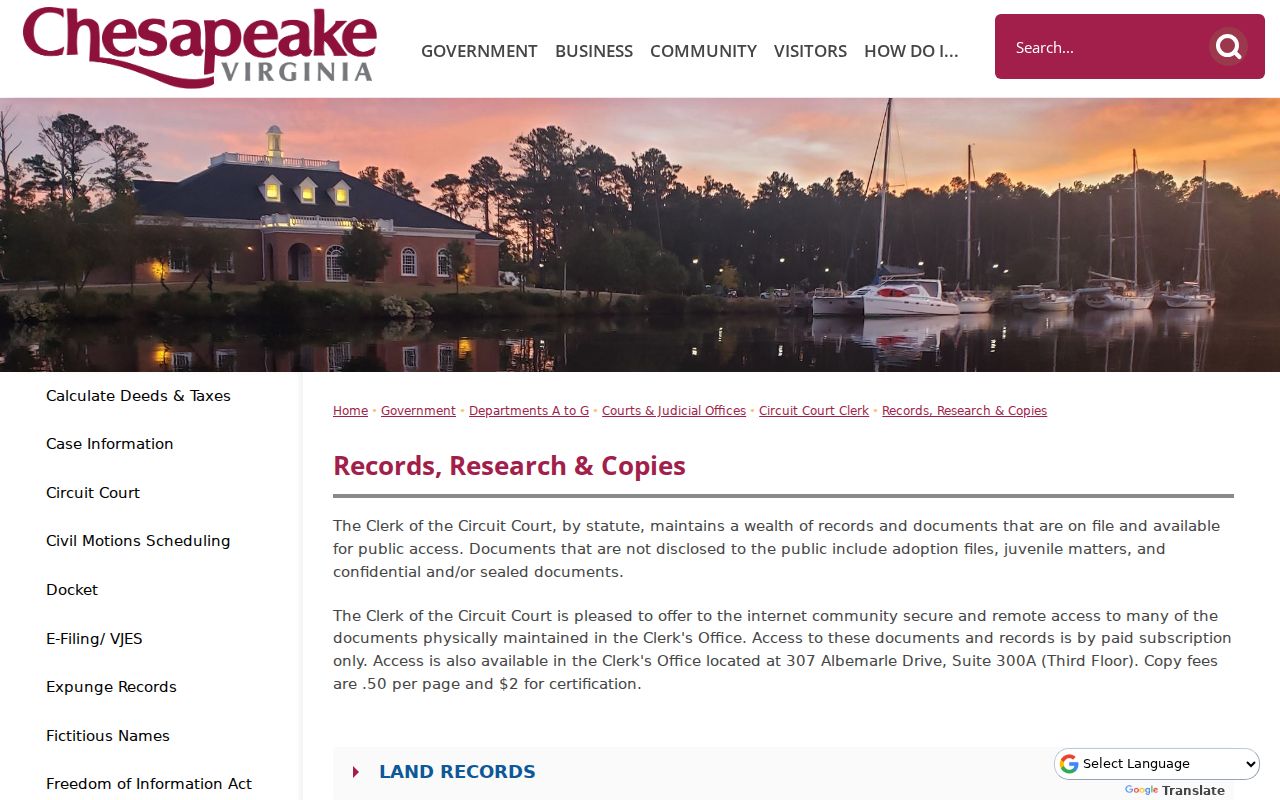
Take the map reference, locate the plat, and verify that its lots match the deed description.
Open Chesapeake Deed Images
The SRA system splits the index entry from remote image access. Some Virginia courts offer a free index. Images require local clerk authorization, a signed agreement, and any subscription fee. Chesapeake lists a $600 annual subscription. Counter copies run $0.50 per page, and certification costs $2.00. So an index reference can back a paper-copy request. That works well when remote access is out of reach.
The Virginia SRA land-record entry point pictured below begins the Chesapeake grantor-grantee search. A separate state help page describes the index-only and image-access tracks.
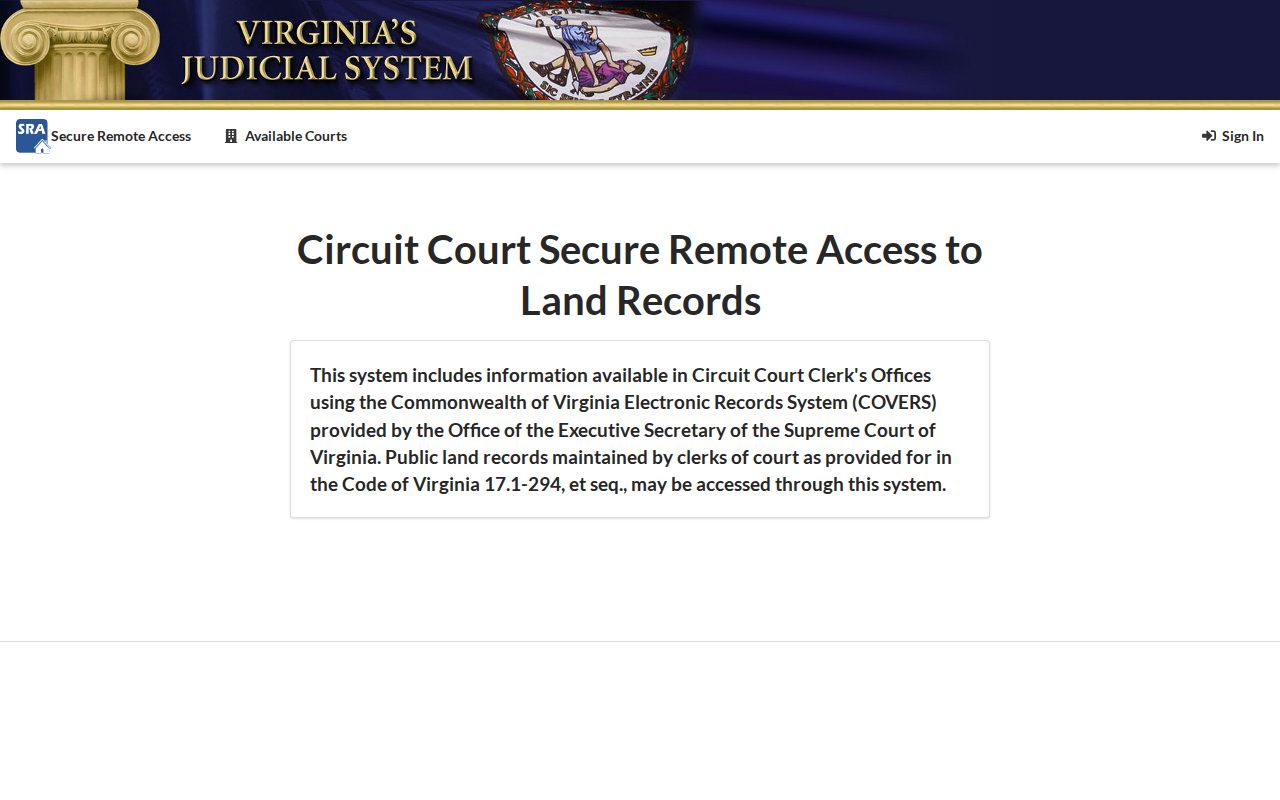
The SRA index can supply a deed reference first. The image then comes from the clerk.
The Virginia SRA help page pictured below explains the index and subscription-image distinction.
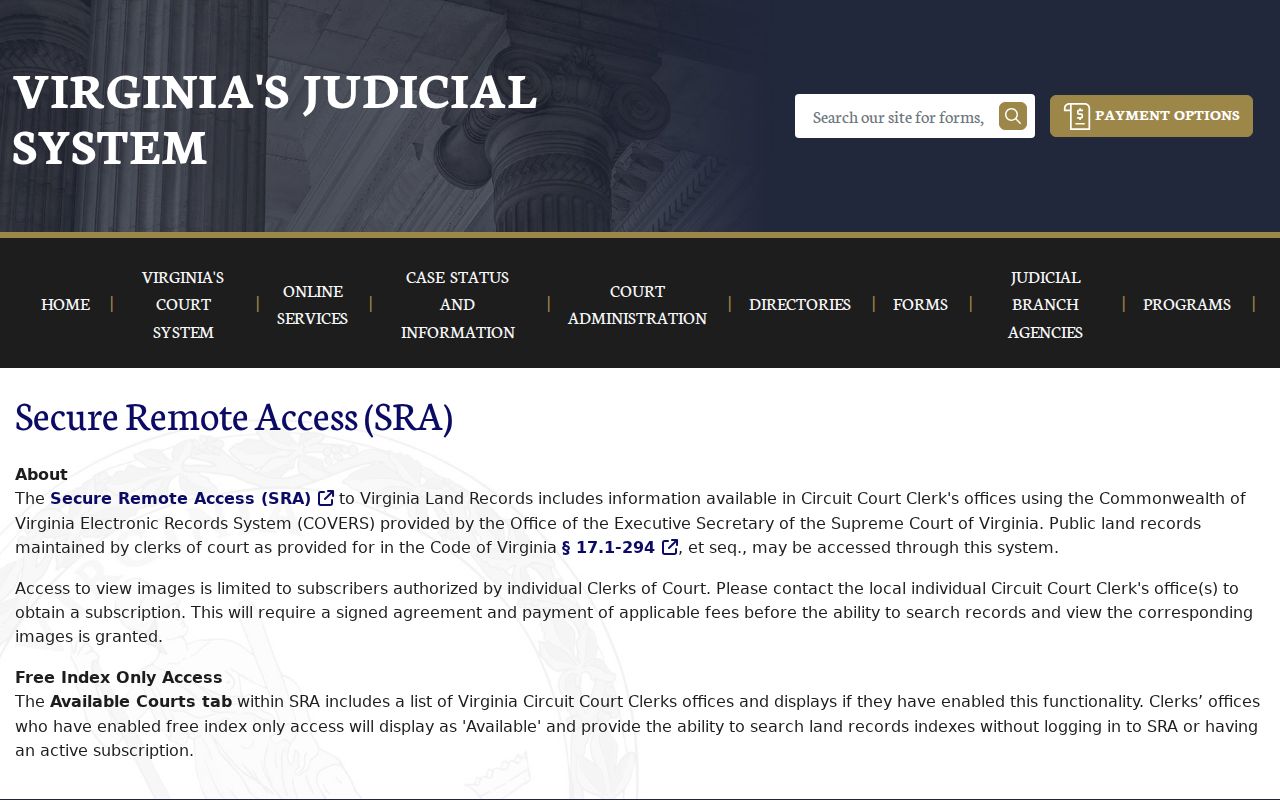
If the image is gated, keep the index details and use the courthouse copy channel.
Estate Transfers in a Chesapeake Chain
An owner's death can break a clean sale-to-sale sequence. The land may sit in the decedent's name. It stays there until a survivorship transfer, fiduciary deed, court order, or similar instrument changes the record. Search probate for a will and qualification. Then run the personal representative as grantor in the land index. The recorded conveyance links the estate back to the parcel.
A death certificate proves a death. It does not prove who received land. An obituary or family account can suggest a name. It cannot replace probate and deed records. Keep three things separate. There is the source that confirms death, the court file that shows authority, and the land instrument that conveys the property. That distinction keeps an estate parcel from landing on an heir the effective transfer never named.
Build a Chesapeake House History
Former-owner research supports more than a title review. It feeds a house history. Match old deeds to subdivision origins, street names, and plat dates. Chesapeake planning resources describe Great Bridge, Greenbrier, Deep Creek, South Norfolk, and Western Branch in distinct development contexts. Those sources give neighborhood color, while deeds and plats establish the legal sequence.
Some developments carried earlier names. River Walk was Agrarian Pines. Reunion at SoNo was Mill Creek Village. An older plan or record may still use the former name even though residents say the new one. Treat that as a route into the file, not as the legal description. A chain holds up best when each name, date, and parcel reference agrees with the next instrument.