
Chesapeake Deeds and Transfers
Chesapeake deed records tell the story of who has owned local land. Ownership changed one transfer at a time. A search can start with a buyer, a seller, or a parcel description. You can also search Chesapeake deed records by address through the assessor. That gets you a deed reference first. The index points to parties and recording locations. The recorded image carries the legal description and the actual terms. Chesapeake sits on older Norfolk County land. Some properties appear under a former locality's records. Find the right document. Then read its text, later releases, and plats before concluding anything about title.
| Deed Type | What It Does | Common Use |
|---|---|---|
| Transfer deed | Records a stated conveyance and names the grantor and grantee. | Match the parties and legal description to the parcel. |
| Fiduciary deed | A personal representative conveys estate property under recorded authority. | Read with the probate file. |
| Deed of trust | Secures an obligation and does not serve as the ownership transfer deed. | Search for a later release or satisfaction. |
| Judicial-sale conveyance | Records a transfer after the required court process. | Confirm the sale order and final instrument. |
| Plat reference | Links a deed description to a recorded lot or map. | Use map book, page, subdivision, lot, and block. |
The index reaches beyond deeds. Chesapeake land records also cover plats, wills, judgments, financing statements, and assumed names. Keep in mind that a recorded document only shows what was filed. It is not a ruling on the rights it creates. A tax sale, for instance, demands review of the court process. It also requires the final conveyance, not just the notice.
Always note the document type beside each result when comparing records. A deed of trust secures debt and may be followed by a release. Do not mistake it for a transfer deed naming a new owner of record. A judicial-sale deed belongs with its case and sale order. A plat reference explains lot geometry but conveys nothing. These distinctions matter when one name and parcel pull up several entries.
When an instrument references multiple parcels or a parent tract, compare the entire legal description. Also compare every cited exhibit. The grantor-grantee names may look right. But the conveyed land may sit elsewhere or cover only part of the property. Before treating any instrument as the latest ownership event, record its dates, document number, parties, and land description.
Use Chesapeake Deed Records Index
The Chesapeake grantor-grantee index works by party. A grantor gives up or releases an interest. A grantee receives one. Search the buyer as grantee to find an acquisition, then run the seller's name as grantee to reach the prior transfer. Try alternate spellings, initials, former names, company names, and fiduciary roles. A name match is only a lead until the legal description fits.
- Search the present owner's name as grantee and note the recording date and document number.
- Open the instrument and copy the grantor, legal description, and any deed-book or plat reference.
- Search the prior grantor as grantee, then compare the earlier legal description to the same land.
- Repeat until the desired period or index boundary is reached; use Norfolk County and South Norfolk as predecessor terms when needed.
- Grantor
- The party conveying an interest in the instrument.
- Grantee
- The party receiving that interest.
- Chain of title
- The sequence of recorded transfers tied to the same land.
- Book and page
- A volume reference; newer records may use an instrument or document number.
Preserve each entry's original name form, including company suffixes. Include any executor, administrator, or trustee capacity. The same party may appear under a different form in a later deed. If a grantee search stalls, test a likely variant. Compare the linked instrument instead of assuming a new person or a different property.
Older Chesapeake land may sit under Norfolk County or South Norfolk in the index. Search those predecessor localities alongside the party names. Carry forward every book, page, map, lot, or block reference you find. Each backward step should link through the legal description, never through a seller name alone.
Get a Chesapeake Deed Copy
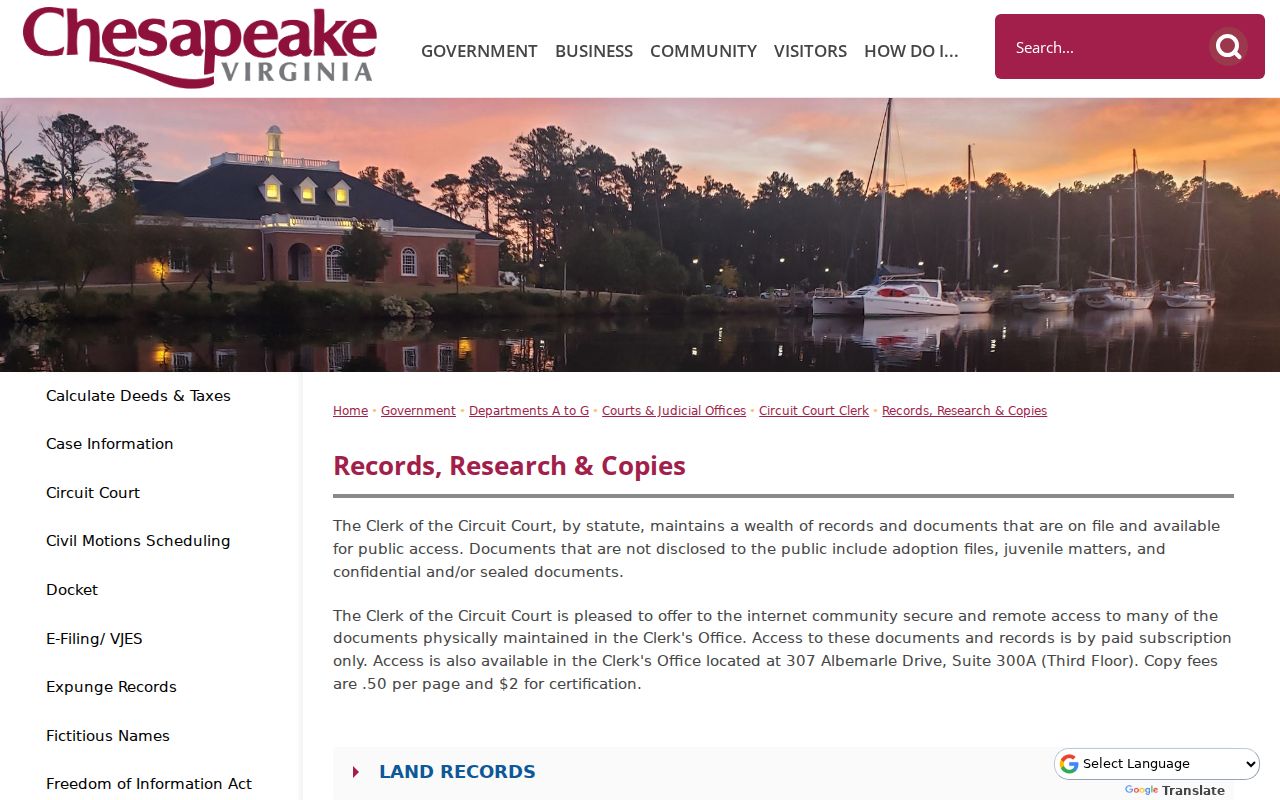
The Circuit Court Clerk advertises deed indexing and imaging from 1637 to current. Virginia's Secure Remote Access system may show the index. It keeps images behind a paid, clerk-authorized subscription. Chesapeake's local page lists a $600 annual remote subscription. At the counter, copies run $0.50 per page, with certification adding $2.00. Is an index entry unclear? Call or write the clerk. A request may also need a document reference.
Give the parties, the approximate recording date, and a document or deed-book reference. State whether you need certification. That detail makes a clerk inquiry actionable. The online image account may not open the document. Keep the index result as a citation. Then confirm the delivered copy includes the legal description and any exhibit that matters.
Recorded, not guaranteed. The index shows filed instruments, not every possible interest or an opinion that title is clear. Compare the deed with releases, liens, court orders, and the legal description.
Chesapeake Deed Records Coverage
The clerk's published coverage dates differ by record type. The deed span is broad. Still, the clerk cautions that South Norfolk and Norfolk County data varies. An online start date never promises that every predecessor record is indexed the same way or that every image opens remotely.
| Record group | Published coverage | Search note |
|---|---|---|
| Deeds | 1637 to current | Search parties and confirm the legal description. |
| Wills | 1755 to current | Probate materials can explain fiduciary transfers. |
| Plats | 1879 to current | Use subdivision, lot, map book, and parcel references. |
| Judgments | 1987 to current | Look for later satisfaction or release. |
| Financing statements | 1998 to current | Check instrument details and whether a filing concerns the land. |
The clerk's records and copy page lists the coverage and access terms. Its breadth suits house history well. A chain crossing a boundary or an older locality can still need a clerk's help.
The Chesapeake clerk records page is the official source for year ranges. It also sets the local copy rules.
Chesapeake deed records answer different questions depending on the index you pull. A deed series traces conveyances. A plat series ties a subdivision name to a lot. Wills and probate records explain why a fiduciarary sometimes signed. Each series covers its own date range. So treat any range as a starting point and confirm the exact instrument and locality before relying on it. Judgment and financing filings raise a different issue. Those entries may need a later release or satisfaction before their current effect is clear. References cross over between record types. So follow them rather than assuming every item under one name is the same kind of claim.
Chesapeake Deed Records Index and Image Access
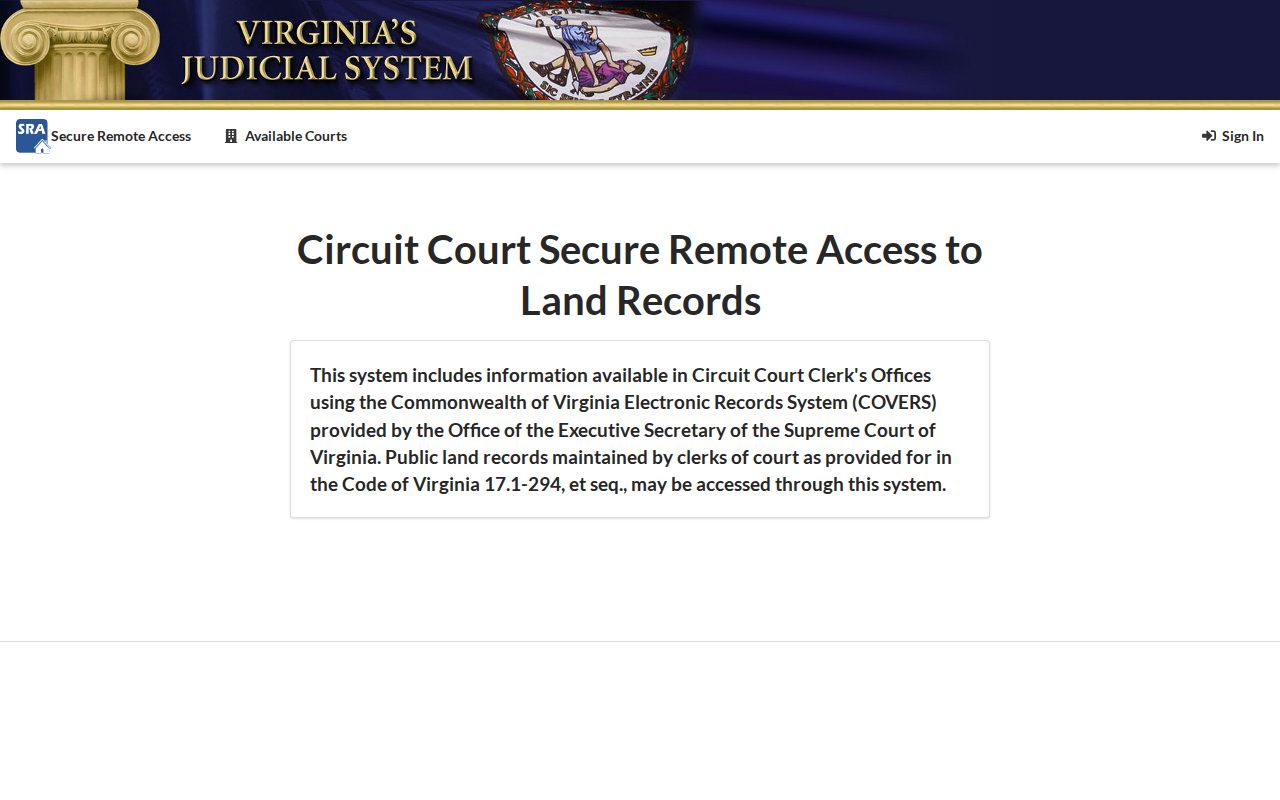
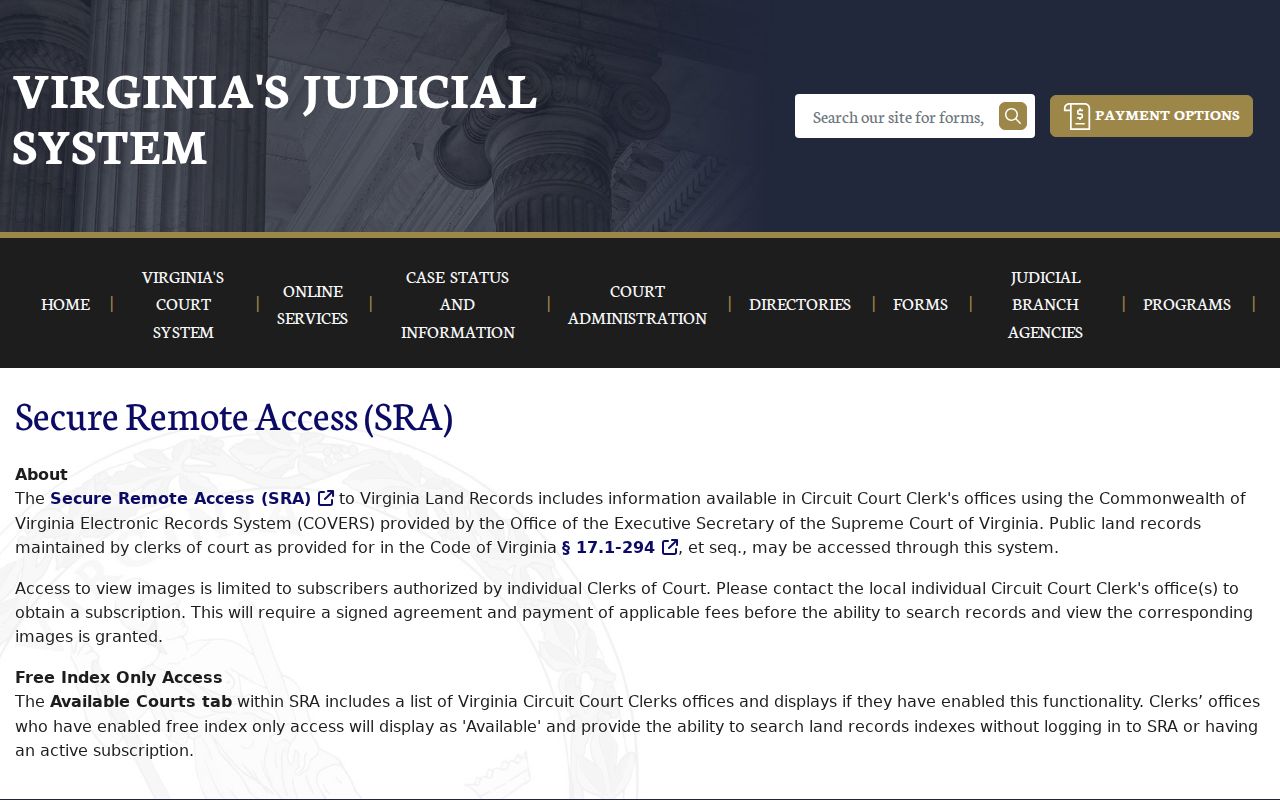
Access varies by court, as the state SRA page explains. Some systems offer a free index. Others charge for images. Remote image access usually requires a subscription the local clerk approves, a signed agreement, and fees. Chesapeake runs its own paid remote arrangement through the local court. A free index result does not always include a downloadable deed image. The Virginia SRA land-record entry point pictured below reaches Chesapeake grantor-grantee records. The local court's rules govern what you can view remotely.
Virginia SRA access information pictured below separates free index searches from paid image subscriptions. When a record stays out of reach online, the courthouse counter and a clerk copy request still work.
Use the free index first. Capture the party name and recording reference before requesting a copy.
Monitor Chesapeake Recordings
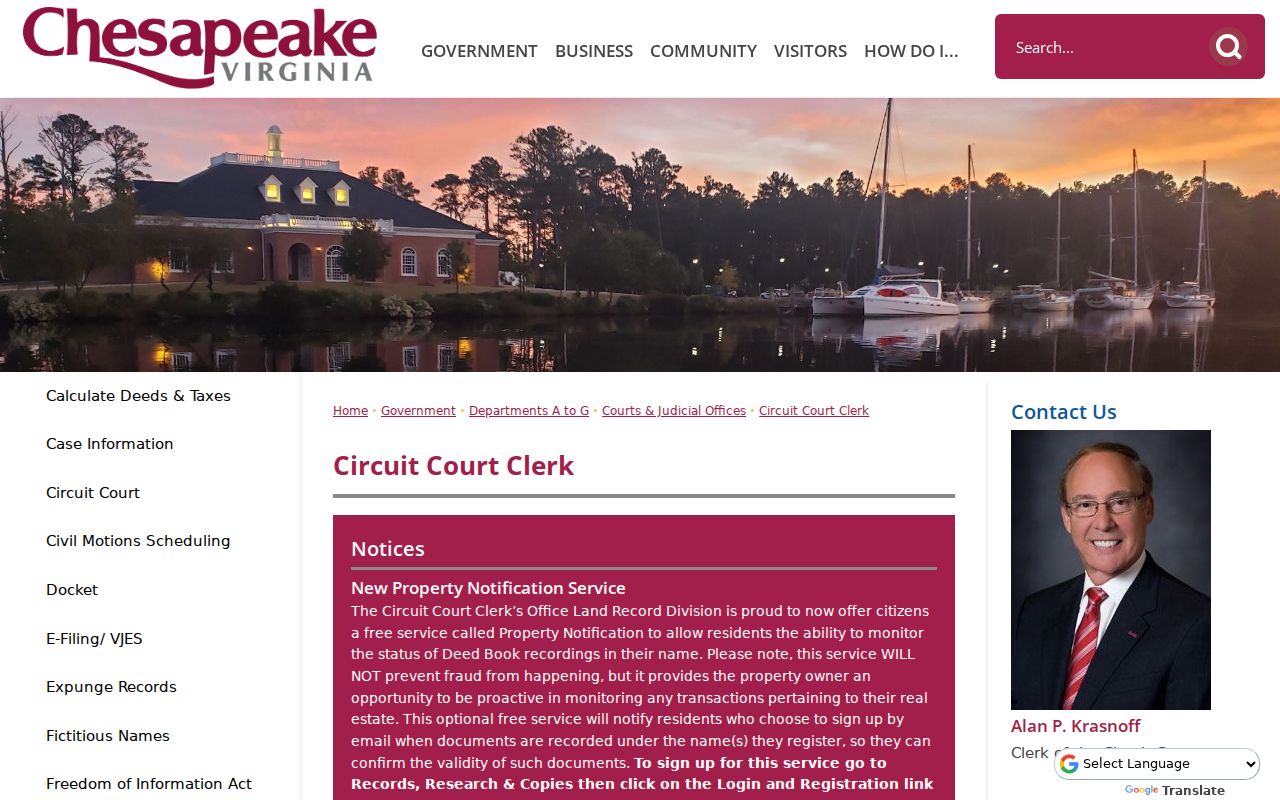
The Chesapeake Circuit Court Clerk offers a free Property Notification service. You supply name forms and get an email whenever a document is recorded under a matching name. That can flag an unexpected filing worth following up. The clerk is clear on the limits, though. The service does not prevent fraud. It watches names, so it cannot guarantee that every instrument touching a parcel will trigger a notice.
The clerk's sign-up page spells out registration and its warnings. Try every spelling variant when you register. When an alert arrives, pull the recorded instrument itself. Notification works best after you know the exact name used in a deed, and it should supplement, not replace, ordinary review of Chesapeake title records. The Chesapeake Circuit Court Clerk information page pictured below describes Property Notification and its warning.
Treat an alert as a prompt. Verify the source document yourself.
Read Plats Beside Chesapeake Deeds
A deed may name a subdivision, lot, block, or older parent tract. Chesapeake plat records begin in 1879. A plat shows lot lines, road dedications, easements, and map-book references that never fit in a short index row. The city's GIS subdivision data carries Name, MapNumber, MapBook, and Record fields. Those fields connect a neighborhood label to the filed map.
Plats do not replace the deed. An easement drawn on GIS is only a lead. Pull the recorded instrument or plat for exact language. Financing statements and judgment entries deserve the same follow-through to any release, satisfaction, or later court order. The deed is one part of the title trail.
Search South Norfolk and Norfolk County
Chesapeake formed in 1963 from Norfolk County and South Norfolk. South Norfolk had been a town since 1919. It became an independent city in 1950. A present street or subdivision name may not appear in any predecessor deed. For an older chain of title, search both predecessor locality names. Keep the land description intact. Follow grantor and grantee parties across each transfer.
The clerk's note that other South Norfolk and Norfolk County data varies is a practical warning. It stops a searcher from reading the 1637 headline as proof that every older record sits under modern Chesapeake. When a deed reference dead-ends, try a different locality filter, a counter search, or archive guidance before hunting a new parcel name.